

Why Alan signed up to take part in dementia research
A man l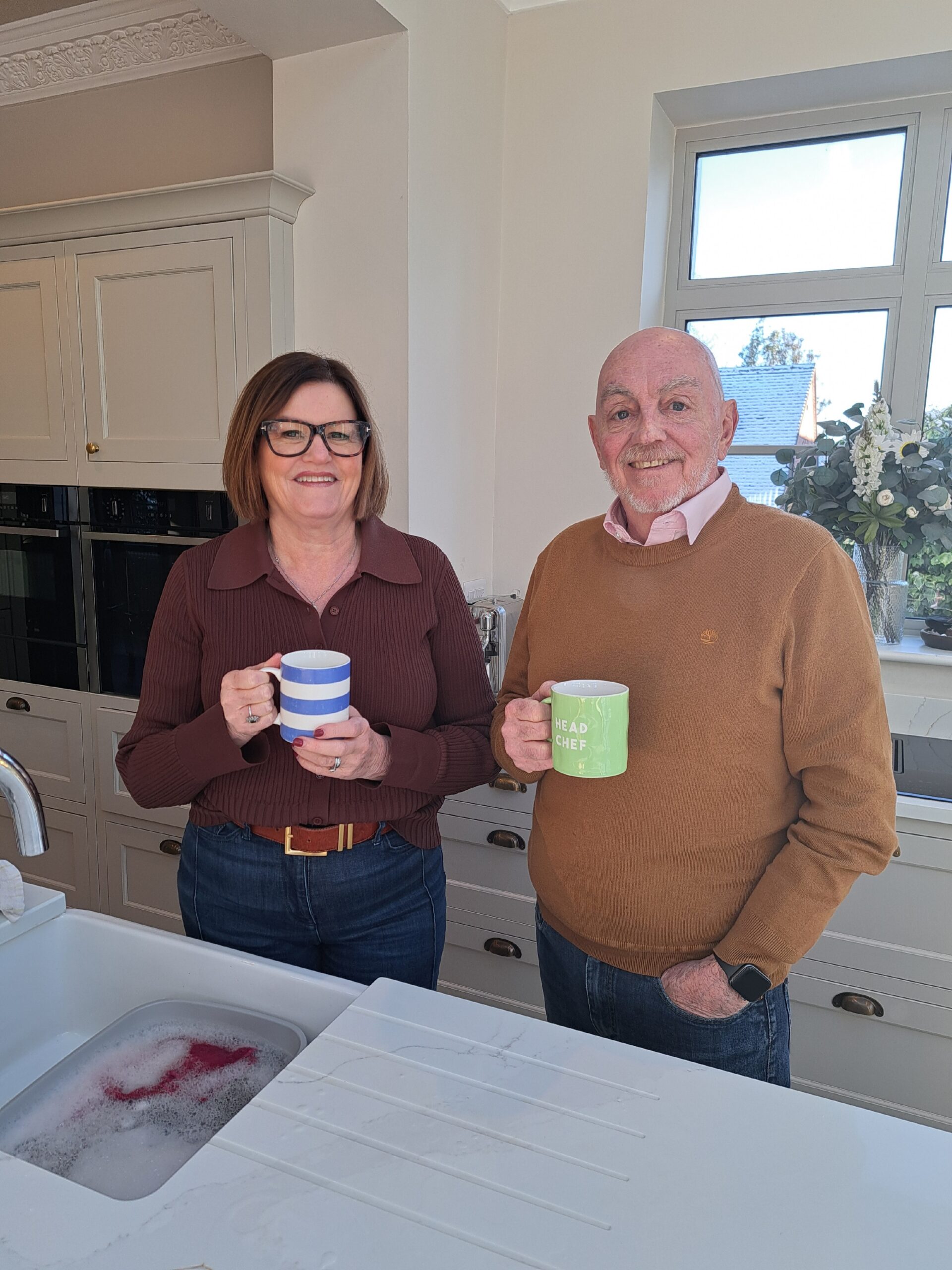 iving with Alzheimer’s disease says his condition feels like he is “disappearing”. He is taking part in research as he seeks to benefit himself and others in the future.
Alan Cope, 69, a former parish councillor, signed up to the READ-OUT – REAl world Dementia OUTcomes: Observational Study.
The READ-OUT study aims to introduce blood tests into the NHS within the next 5 years. The results will assess whether these can be used to diagnose dementia faster than current brain scans.
Alan, from Lichfield, Staffordshire, was diagnosed with the disease in October 2022. He now struggles to perform daily tasks. His wife Donna, 62, had concerns about her husband’s memory loss a decade ago. Alan, a retired salesman, wants the condition more widely recognised and researched.
If the study is successful, it could make dementia diagnosis more accessible and less stressful for patients.
It also aims to assess blood tests to detect different types of dementia. It will examine how well these tests work across different ethnic groups and people with other health conditions.
Led by the Universities of Oxford and Cambridge, the study is being delivered across the UK and is part of the Blood Biomarker Challenge.
This multi-million pound programme is supported by the NIHR, Alzheimer’s Society, Alzheimer’s Research UK, Gates Ventures and the People’s Postcode Lottery.
Alan, whose mum, aged 99, and 3 uncles also have dementia, took part in the study through Midlands Partnership University NHS Foundation Trust (MPFT).
Alan and Donna, who have 2 children and 4 grandchildren, are determined to fight the disease head on, so Alan is engaged mentally and physically on a daily basis.
He walks their 2 labradors, Arthur, aged 3, and Teddy, 7, and tends to their 4 ducks and 4 chickens.
His grandchildren keep him busy playing and set tasks, and the couple have a friend who comes to socialise with him to provide further stimulation.
“I try my best and I look at things that I can do rather than what I can’t,” said Alan. “The dogs help me and I feel more comfortable having them with me.”
Donna, a chief financial officer for a dental company, said the Alzheimer’s diagnosis “smacked me like a blow to the face”, but added: “We have both said from day one that we would take part in any studies because there’s a chance it could help Alan, but if not, then it could help people in the future.
“Alan is a very nice, gentle, quiet man who does not show any outward signs of dementia. But the truth is he needs support and assistance, from taking tablets to having to give him very simple instructions, one action at a time.
“It’s a complete decline in the competence and ability to carry out the most basic tasks. For example, in years gone by, we’d discuss jobs in the house, maybe refitting the bathroom, and in no time at all, he’d be getting on with it.
“He can’t prepare meals any more. So in later years, we have done more things together. He gave up his driving licence 2 years ago because of our concerns about him driving. I’m very proud of him for this.
“Alan has described it like he is disappearing. I’m sad and I’m grieving and no one can take the pain away. But he is the best granddad I know and the grandkids adore him.”
Susan Bradbury, Team Leader and Clinical Research Practitioner at MPFT, said: “It has been a pleasure to involve Alan in this research study as we are aware both him and Donna are passionate about being a part of research in the field of dementia.
“The READ-OUT study focuses on the potential of blood tests as a way to aid diagnosis in a wide variety of dementias, as well as early cognitive changes. Researchers at MPFT note that many attendees to its memory clinics are interested in the possibility of blood tests for detection.
“By examining biomarkers from blood samples such as those kindly donated by Mr Cope, results can aid understanding into the usefulness of these tests and contribute to general UK findings for the READ-OUT study.”
More than 3,100 participants will be recruited for the READ-OUT study from NHS memory clinics and mobile community testing units across the UK. The READ-OUT study is not currently recruiting through Join Dementia Research.
Interested in taking part in other dementia research studies?
You can register your interest in other vital dementia research via the Join Dementia Research website. By taking part, you could make a huge difference for future generations.